 Brochures
  Get in touch
  Join EFAP
 Why Intermarché’s advertising is a hit (and what it says about today’s marketing)
An Intermarché advertisement that went viral in just a few days
Released ahead of the holiday season, Intermarché’s new advertisement follows in the footsteps of Christmas films that leave a lasting impression, fully embracing the emotional connection with viewers. Lasting over two minutes, the spot stands out from the ultra-short formats usually favored and embraces a truly cinematic narrative, much closer to a short film than a promotional message! Here, the goal is not to sell a product, but rather to tell a (beautiful) story. And it works!
Very quickly, this short film (because that’s exactly what it is) went beyond the advertising sphere. Widely shared internationally, it has accumulated millions of views and sparked a wave of enthusiasm and positive reactions on social media. A resounding success that confirms Intermarché’s ability to design campaigns with strong emotional value, capable of going far beyond simple commercial promotion.
The story told: the tale of the “unloved”
At the heart of this advertisement is a character: a wolf rejected by the other animals in the forest. Perceived as dangerous and undesirable, he nevertheless tries to change his image by altering his eating habits in order to get closer to the others. Through this modern fable, Intermarché addresses universal themes: exclusion and the gaze of others, personal transformation, acceptance and living together. The story, told without dialogue, relies on pure emotion and the power of imagery. A strong narrative choice that allows everyone to appropriate the story and project their own interpretation onto it. By tapping into the universal and the human, this spot manages to create a sincere connection with viewers… to the point of making some of them shed a small tear by the end of the viewing.
Intermarché, a brand known for emotional advertising
.jpg)
This success is no coincidence. Intermarché is no stranger to standout advertising campaigns. In recent years, the brand has made its mark with several iconic campaigns, notably those centered on love, everyday life, and responsible consumption, often constructed like genuine short films.
Each time, the recipe is the same: a strong story, little or no commercial discourse, and a central focus on emotion. This consistency has allowed Intermarché to build a recognizable advertising signature that the public now identifies and expects. The Christmas advertisement naturally fits into this long-term strategy, where meaning and storytelling take precedence over direct promotion.
Who is behind this Intermarché advertisement?
Behind this emotionally charged film is the agency Romance, renowned for its ability to design narrative, sensitive and deeply human campaigns. True to its creative DNA, the agency delivers a universal story that places emotion at the heart of the message. Production and animation were entrusted to leading French studios, including Illogic Studios and Wizz, both specializing in high-end animation. Over several months, dozens of artists — animators, directors and illustrators — worked meticulously on every detail of the film to give it its cinematic dimension.
One key element sets this advertisement apart from many current productions: it was not created using artificial intelligence. The animation was produced in a traditional way, frame by frame, with particular attention paid to textures, expressions and the emotions of the characters. A strong artistic choice, fully embraced, that contributes to the film’s authenticity and reinforces its emotional impact on audiences.
Music: a powerful driver of virality
It is hard to talk about the success of this Intermarché advertisement without focusing on the music. By revisiting “Le Mal Aimé” by Claude François, the brand chose an old yet instantly recognizable track, rich in emotion and nostalgia. The impact was swift and very tangible. In just a few days, streams of the song soared across music platforms, with a particularly strong increase on Spotify and Apple Music. A track released decades ago suddenly returned to the spotlight, embraced by a new generation of listeners.
On social media, the phenomenon continued. The song became viral on TikTok and Instagram, where thousands of users appropriated the excerpt to create their own videos, often directly connected to the emotion of the spot. Music no longer merely accompanies the advertisement: it becomes one of its main distribution drivers. By anchoring itself so strongly in the musical sphere, Intermarché strengthens recall of the film and emotional attachment. This strategy perfectly illustrates the central role of music in a viral campaign: the right musical choice can extend the impact of an advertisement well beyond its initial release, turning it into a true cultural phenomenon.
This massive public appropriation of the music does not stop at listening or sharing the spot. It is part of a broader movement of attachment to the film and its universe… ultimately giving rise to a new object of desire: the wolf plush toy.
When advertising goes beyond the screen: everyone wants the wolf plush
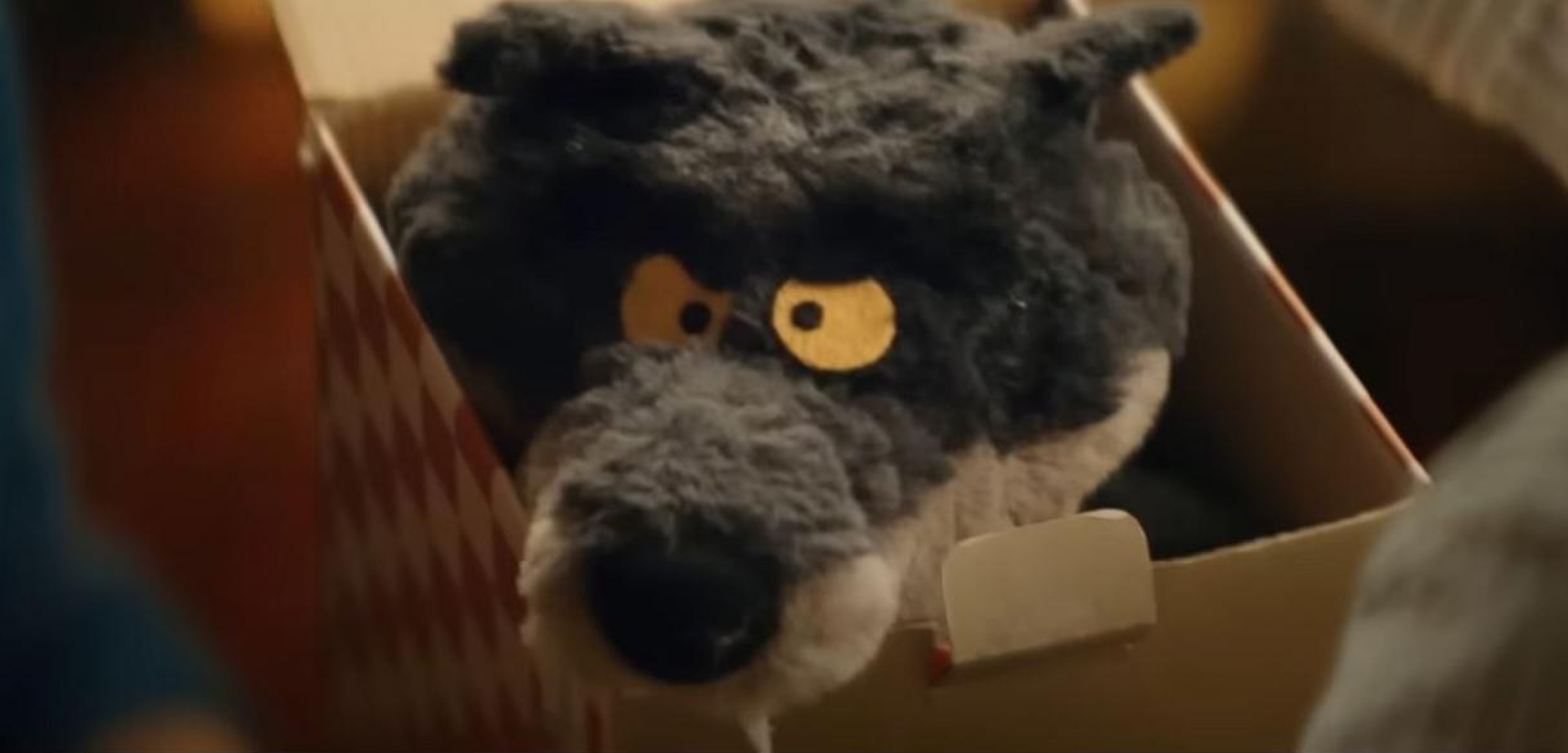
The ultimate proof of this campaign’s impact is that audiences didn’t just watch and share the film: they were eager to extend the experience. Very quickly, internet users expressed a desire to buy the wolf plush toy, which has become the symbol of the spot. On social media, requests multiplied, turning the character into a true object of emotional attachment.
Faced with this enthusiasm, Intermarché quickly stated that it was considering producing the plush toy. A strong signal, perfectly illustrating the ability of a successful advertising campaign to generate desirability beyond its initial message, even creating the potential for a spin-off product! After all, who wouldn’t be tempted by this adorable wolf, not so scary after all?
A case study for future communicators
This Intermarché advertisement stands out as a true case study for students and communication professionals alike. It clearly demonstrates the importance of storytelling, choosing the right emotional levers, and maintaining long-term brand consistency. More than just an advertising film, it shows that a well-thought-out creative strategy can generate virality, engagement and even product desirability.
At a time when artificial intelligence is reshaping creative practices, this campaign also serves as a reminder that human creativity, emotion and meaning remain fundamental pillars of communication. A valuable lesson for those aspiring to careers in marketing and advertising: it is often the simplest and most sincere stories that leave the most lasting impression.
See other news

Quels métiers sont accessibles après une formation événementiel Rennes à l'EFAP ?
Près de 20% des diplômés de l’EFAP évoluent dans l’événementiel, un chiffre qui souligne l’importance de ce secteur au sein de l’école. Installée dans une ville dynamique et attractive, la formation en événementiel à Rennes permet aux étudiants de bénéficier d’un environnement stimulant, d’un tissu économique local riche et de nombreuses opportunités professionnelles.
read more

Se former au digital : pourquoi choisir une formation en communication digitale Bordeaux à l’EFAP ?
Le digital et l’intelligence artificielle ont profondément transformé le monde de la communication. Les entreprises recherchent aujourd’hui des profils capables de maîtriser les nouveaux outils numériques, d’analyser les données et de concevoir des stratégies de marque performantes. Dans ce contexte, suivre la formation en communication digitale à Bordeaux proposée par l’EFAP, c’est choisir une voie tournée vers l’avenir. L’école accompagne ses étudiants dans la compréhension des nouveaux usages du web, du marketing d’influence, du contenu de marque et de la data. Les étudiants acquièrent les compétences nécessaires pour répondre aux exigences des métiers du digital, en constante évolution.
read more
Générations EFAP: More Than a School, a Community for Life
Since 1961, generations of EFAP students and alumni have followed in one another’s footsteps, connected and passed on the same shared spirit. With its new brand platform, “Générations EFAP,” EFAP celebrates this enduring bond that makes the school much more than a place to study: a community you join and remain part of for life.
read more