 Brochures
  Get in touch
  Join EFAP
 Why the human element remains at the heart of events: an interview with Nunzia Passacantando
Rethinking event management in 2026: an interview with Nunzia Passacantando, director of the Specialized MBA in Communication & Event Management at EFAP
In a world where digital technology seems omnipresent, events stand out today as the last bastion of human contact and tangible experience. It is with this conviction that Nunzia Passacantando, backed by a prestigious career within major agencies and advertisers, designed her book: " The Event Management Toolbox " published by Dunod.
Far from being a simple logistics manual, this book is intended to be a true "practical bible," drawn from the best practices from across the Atlantic, to reposition events as a strategic marketing and communication channel. Through 65 concrete tools, she invites us to move beyond mere technical coordination to touch the heart of the brand promise and human emotion.
Director of the Specialized MBA in Communication & Event Management at EFAP and a high-level consultant, Nunzia shares her vision today of a profession in full mutation, between field expertise and new technological challenges.

Hello Nunzia, can you tell us about your career and explain how you became the director of the Specialized MBA in Communication & Event Management at EFAP?
My background is a mix of agency and advertiser experience. I started in receptive tourism for an international corporate clientele coming to host events in France. Then, I joined major structures like MCI (where I managed the receptive department) and then American Express. At Amex, I was head of communication and the MICE (Meeting, Incentive, Conference and Event) department for France and Belgium. We worked for giants like LVMH, Kering, or Vinci. That is where I truly saw events as a lever to embody a brand's promise: what we call brand activation.
After an MBA and opening my own consulting firm, I supported Alstom for a year following the acquisition of Bombardier. There was a huge brand positioning and human challenge to move from a European culture to a global dimension. Then, after a stint as West Europe marketing director at Coface, I returned to my firm. Teaching became a natural step: I was already lecturing at EFAP, and I was entrusted with the direction of the Specialized MBA in Management & Event Management.
What prompted you to condense your expertise into this "Toolbox"? What was the gap you wanted to fill?
The subject was already covered in literature, but books are often too biased; or else, event management is only treated in a single chapter of communication textbooks, which prevents a deeper understanding and practical application.
The gap was therefore having a reference work that addresses both the strategic function and the operational management of events. I wanted to create a comprehensive guide, a sort of "practical bible" like those found in the USA.
My goal was also to reposition event management. It is often reduced to logistics, whereas it is a marketing & communication channel above all. In a context of increasing digitalization and audience weariness towards traditional insights to drive message alignment, events are the only channel that allows the audience to be in direct contact with the brand's image and promise, and to live a concrete experience with the advertiser. It is this triple dimension - strategic, human, and operational - that I wanted to convey, covering the entire spectrum: content, strategy, and deployment, which are the pillars of experiential marketing, with events being the main tool.
What is the skill that has become absolutely essential for an event project manager in 2026?
It is imperative to have adaptability, responsiveness, and strong interpersonal skills. Beyond technical skills, soft skills make all the difference. This is notably what I teach my students at EFAP.
Event management is a stack of small areas of expertise. You need to have:
- A large network: which allows you to solve the most difficult issues and find solutions when everything seems blocked.
- Patience and responsiveness: changes are so numerous that you need the patience to understand, evolve, and sometimes step back to move forward better. Responsiveness is just as crucial to handle major changes quickly without losing track.
- A sense of humanity: we work with people, under urgency, with very short timelines. Relationships are therefore essential to move forward together and understand each other well.
If you had to pick just one tool out of the 65 presented in your book, which one would it be?
It would be the "Job to be Done." It is the "Why." You cannot succeed in an event without defining its deep objectives:
- The functional objective: This means defining the concrete purpose of the meeting. Is it to train employees, launch a product, or celebrate a company anniversary? Without this clarity, the event risks being nothing more than a succession of services without coherence.
- The emotional objective: This is the heart of the customer experience. Guests will probably forget the menu, but they will never forget what they felt. The emotion and transformation that the audience must experience through the event are at the center of the subject; they must be carefully designed before all logistical aspects, which are, for their part, means to implement the attendee's experience.
- The societal objective: Each stakeholder approaches the event with a societal objective of their own: the brand might look for visibility, the attendee for networking, the speaker for personal recognition, and the journalist for a topic for their weekly magazine. The event must therefore serve the societal objective of each stakeholder, and the organizer must build a specific journey and experience that allow each of them to reach their goal. We must also think long-term, in an increasingly conscious world, what message does the brand send to society through this event? This touches on corporate responsibility and the image it projects beyond its immediate circle.
How do you create a beautiful event with a small budget?
If the budget is tight, you have to bet everything on the customer experience and the emotional memory. The human element takes precedence over the decor.
How does AI integrate into this profession today?
Artificial intelligence is a magnificent tool for design and visualization.
It allows, for example, the generation of realistic visuals to project the client into the project. But it will not replace the project manager, because the complexity of managing an event project cannot today – and cannot, in my view, be completely automated. However, AI is a real asset in managing logistical tasks, but you cannot truly delegate responsibilities to it without supervision.
Indeed, AI makes mistakes which, if not corrected beforehand, can create major malfunctions whose impact during the event can be catastrophic and sometimes irreparable. This is good news for students entering this field because this profession is not among those that will be disrupted by AI in the near future.
A word on your students' current projects?
Each cohort of the Specialized MBA in Communication & Event Management supports at least two concrete event cases submitted by partners.
This year, we supported the Kalaweit association in setting up the event celebrating its founding anniversary, and ran a "Battle" with the City of Paris for the "Paris en Seine" brand. Students worked on the repositioning and brand activation of both partners, and came up with remarkable projects; I am very proud of them.
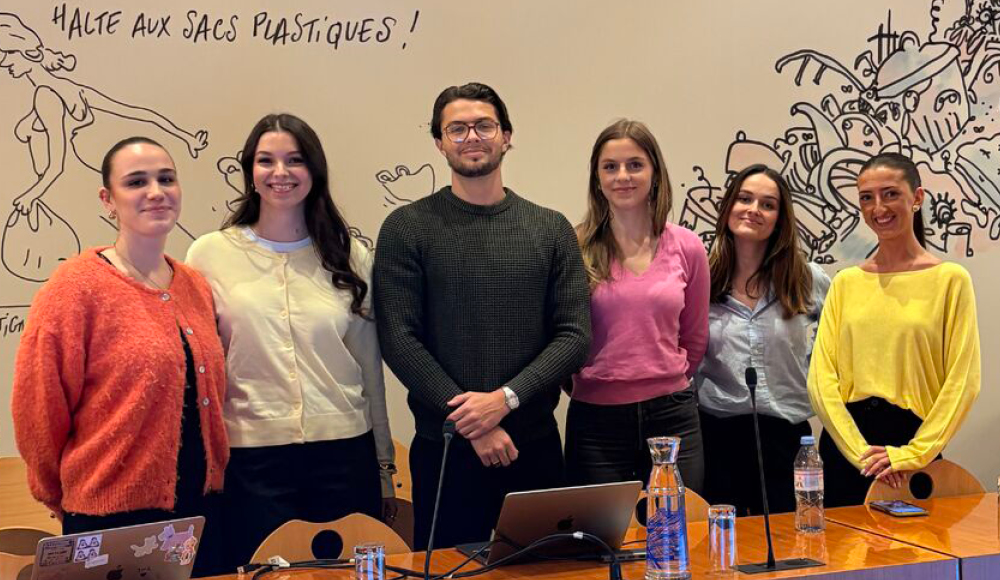
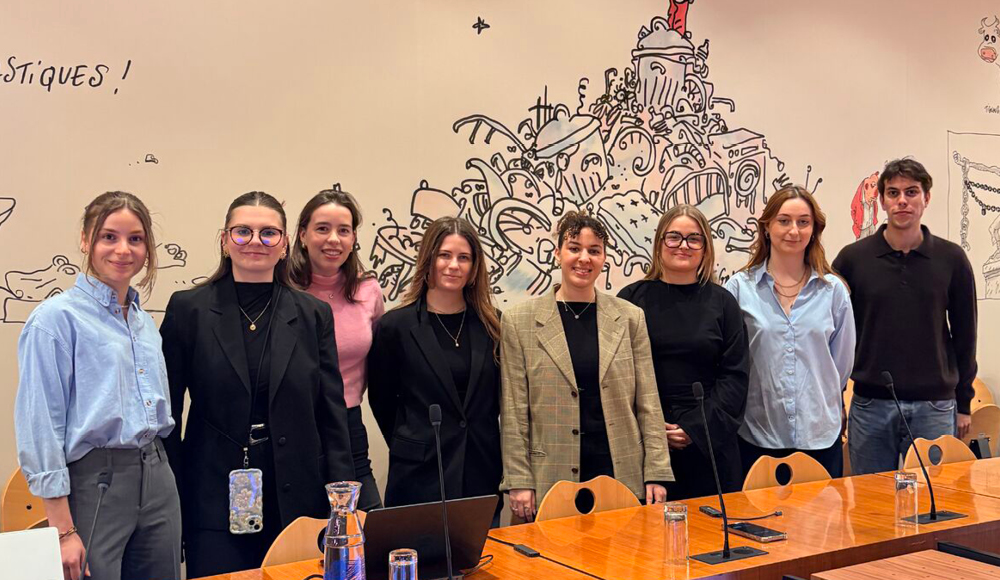
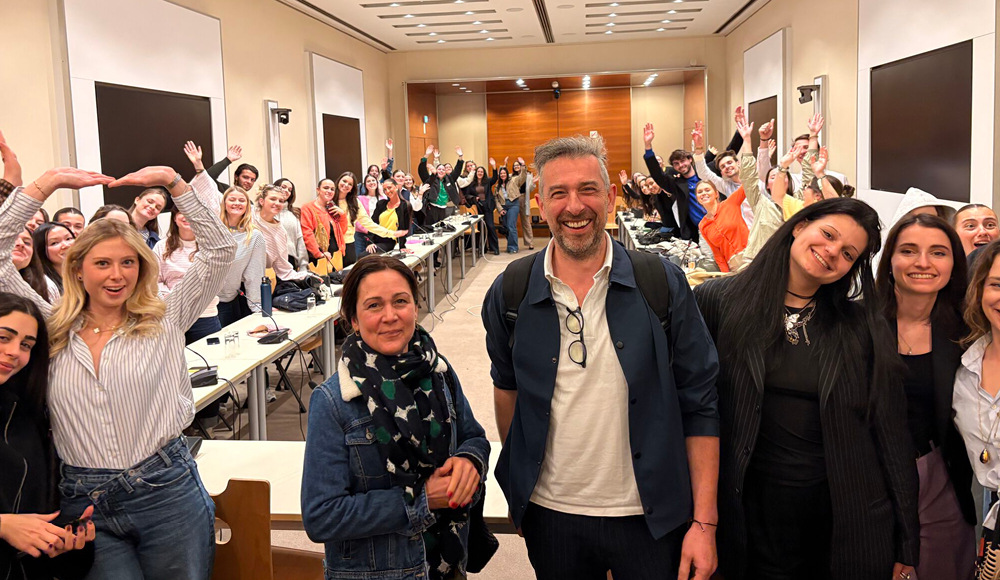
A few images from the battle for "Paris en Seine"
Some of their proposals will also be integrated into our partners' events. This proves that the Specialized MBA in Communication and Event Management at EFAP keeps its promise to offer a curriculum that meets the requirements of the job market, and to train professionals who will integrate more easily into the industry.
Do you also want to design the memorable experiences of tomorrow?
Discover the Specialized MBA in Communication & Event Management at EFAP, a curriculum of excellence rooted in market realities to become a strategic and operational expert in the sector.
See other news

EFAP Hackathon 2026: Students Imagine More Responsible Communication in the Face of Hyperconnectivity
How can we raise awareness about hyperconnectivity without stigmatizing digital habits? As part of the #ForANewBusinessSoul hackathon organized with Canary Call, students from EFAP’s Specialized MBAs in Digital Marketing & Business and CSR Communication & Sustainable Development developed concrete solutions around the OFF February movement, an initiative encouraging people to rethink their relationship with social media.
read more
Pourquoi l’EFAP est l’école idéale pour un master marketing international ?
read more
Vlog: The daily life of an EFAP student interning at Manucurist
The field of communication encompasses a wide variety of professions, both technical and creative. The communication training offered by EFAP serves as a real springboard to access them, propelling its students into the heart of today's greatest success stories. This is certainly true for Eva, an EFAP student who shared her daily life as a Public Relations and Influence Assistant at Manucurist, the pioneering green and eco-responsible beauty brand, through an ultra-immersive vlog format.
read more