 Brochures
  Get in touch
  Join EFAP
 The disappearance of Celio's "L": a strategic tease
Why removing a letter from your logo is a marketing genius move: the case of Celio
In a saturated advertising ecosystem where attention has become the most precious currency, some brands choose to shout louder to exist. Celio, the French leader in men's ready-to-wear, took the opposite path: the path of silence and subtraction.
On March 16, the brand caused a mini earthquake by amputating its logo of its "L" across all its points of sale and digital platforms.
This radical move, far from being a technical glitch or a graphic designer's mistake, served as a launch pad for a historic transformation of the brand. Behind this typographical void was actually a major announcement: the arrival of Celio Women. A look back at this powerful campaign that redefines the codes of viral marketing and brand extension.
The art of disruption: capturing attention through absence
Traditional marketing relies on the accumulation of messages. However, Celio proved that subtraction can generate far more organic engagement. By removing the "L" from its facades and social media avatars with no explanation, the brand immediately established a climate of mystery. This "teasing through emptiness" strategy forced passersby and internet users to stop, question, and most importantly, share.
For several days, the web seized the matter. Between conspiracy theories, assumptions of a failed rebranding, and rumors of a cyberattack, Celio left the field open to the imagination of its community. This phase of silence is a textbook case: it shows that to spark mass conversation, sometimes it is more effective to pose a visual question than to provide an immediate commercial answer. The physical point of sale became the brand's first media outlet, proving that retail still plays a central role in digital virality.
The "L" for "Elles": a seamless narrative transition
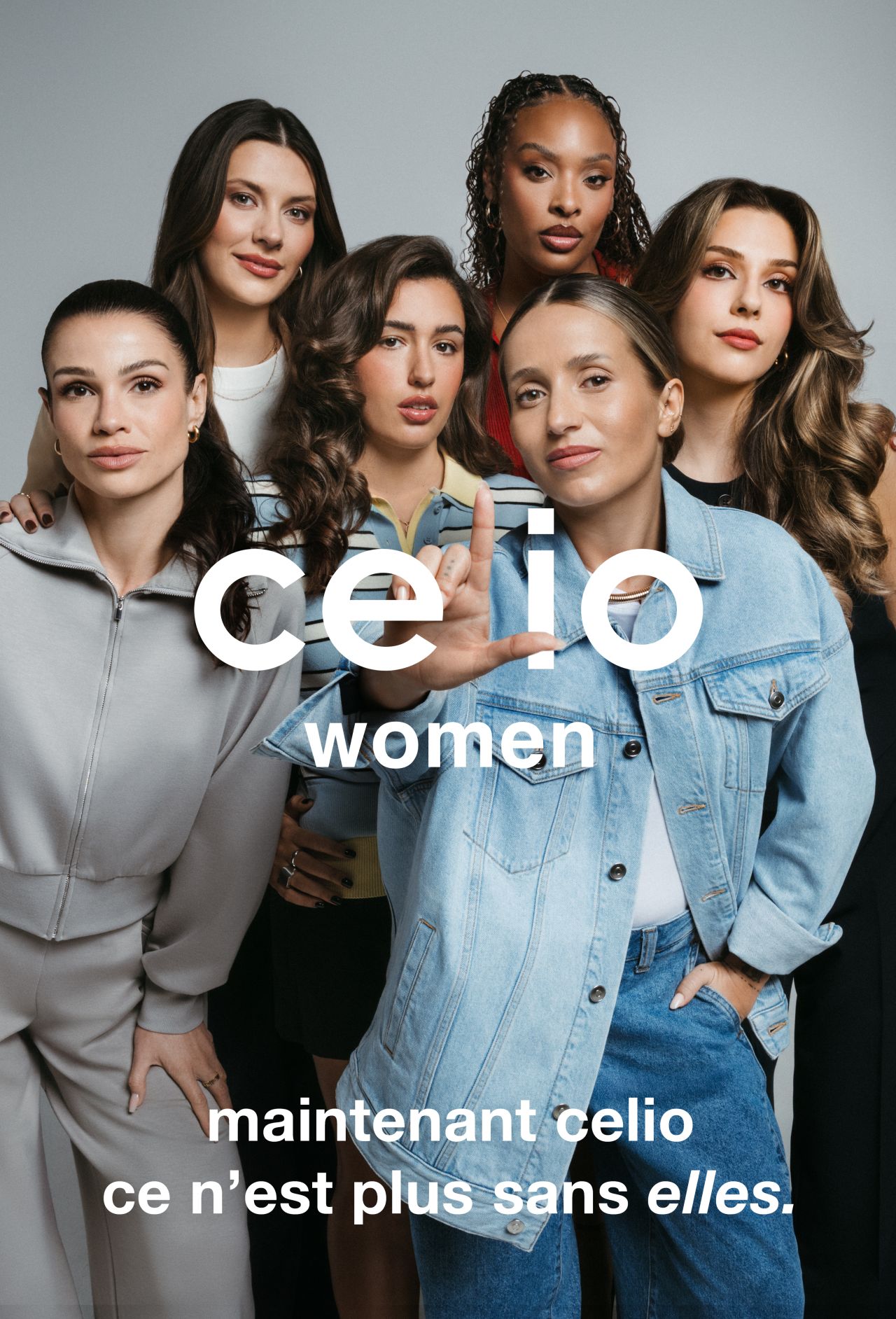
The resolution of this marketing intrigue came with a revelation of surgical simplicity. Under the slogan "Now Celio, it’s no longer without them", the brand unveiled its first collection dedicated to women. The brilliance of this operation lies in its phonetic coherence: the missing "L" wasn’t just a letter, it represented the target audience the brand was about to conquer.
For a brand historically rooted in men's fashion, the challenge was immense. How to open up to the female market without diluting its "be normal" identity? Celio capitalized on a real-world reality: a significant portion of its female clientele already bought men's pieces for their comfort or oversized style. By launching Celio Women, the brand isn’t changing its business; it’s formalizing an already existing relationship. The wordplay on the "L" allows the brand to link the old world to the new one in a seamless way, transforming a graphic break into a strategic given.
The domino effect: when the competition becomes an ambassador
The strength of a great campaign is often measured by its ability to spill over from its original framework.
In just a few hours, the disappearance of the "L" triggered an unprecedented chain reaction in the French marketing landscape. Global giants like Nike, Adidas, Le Coq Sportif and even apps like Duolingo joined the movement. By modifying their own logos or posting humorous content to "search for Celio’s L", these brands amplified the operation’s reach exponentially.
This "Brand Hijacking" phenomenon, orchestrated with the agency Havas Paris, is a rare indicator of success. For a brand to get a competitor to play along, the original idea must be sufficiently playful and universal. By inviting other market players into the dance, Celio turned a simple product launch into a true pop-culture moment, generating millions of organic views without additional massive media investment.
Audacity as a driver of sustainability in retail
What can be learned from this case study for future communication professionals?
First, that the audacity to touch one’s visual identity (often considered sacred) can be extremely rewarding when it serves a coherent narrative. Then, simplicity remains the ultimate weapon for memorization: a wordplay, a letter, a clear message.
Finally, this campaign reminds us that the retail sector is not in decline, it is undergoing a transformation. To exist tomorrow, brands can no longer just sell products; they must sell stories and create events that engage their community both physically and digitally. By opening up to women with such flair, Celio didn’t just give itself a new logo, it gave itself a new future.
Did you enjoy this breakdown?
To dive deeper into brand trends and digital marketing analysis, explore the specialized courses at EFAP and learn how to design the campaigns that will make an impact tomorrow.
See other news
The Next Generation of Event Innovators at EFAP
At EFAP, fourth-year students had the opportunity to put their event innovation skills into practice through a project directly inspired by the winners of Meet-in’s Grand Prix de l’Événementiel. This experience immersed them in the realities of the industry while showcasing their creativity through a variety of content formats.
read more
EFAP ⎮ Big Battle 2026 x Parc Astérix
Dive into the heart of EFAP's 2026 Big Battle! This year, 900 third-year students across 8 campuses had just two weeks to tackle an XXL challenge launched by a entertainment giant: Parc Astérix. Between adrenaline, strategy, and stress management, discover how this unique hackathon is shaking up the rules of communication training. May the best agency win!
read more

Quels sont les débouchés après une formation événementiel Bordeaux à l'EFAP ?
Près de 20% des diplômés de l’EFAP évoluent dans l’événementiel. Un chiffre clé qui témoigne de l’importance de ce secteur. Grâce à son approche professionnalisante et à ses partenariats avec les acteurs majeurs de la communication, la formation en événementiel à Bordeaux de l’EFAP offre de véritables perspectives d’avenir. Découvrez les débouchés possibles après ce cursus complet : des métiers passionnants au cœur de la création, de la coordination et de la gestion d’événements.
read more