 Brochures
  Get in touch
  Join EFAP
 April Fool’s Day: When Brands Turn Humor into a Communication Strategy
Every April 1st, brands compete to capture public attention through deliberately offbeat campaigns. Far from being simple jokes, these activations often represent real communication exercises, allowing brands to assert their positioning, explore new creative territories, and generate engagement.
Behind the apparent lightness of April Fool’s campaigns lies a genuine strategic exercise: surprising audiences without losing credibility, entertaining while remaining consistent with the brand’s positioning. In 2026, several companies demonstrated this ability to play with communication codes by creating activations that were both unexpected, credible, and aligned with their brand identity.
Campaigns that rely on a subtle balance between humor and brand consistency
The success of an April Fool’s campaign relies on a key principle: the idea must be absurd enough to make people smile, yet credible enough to create doubt.
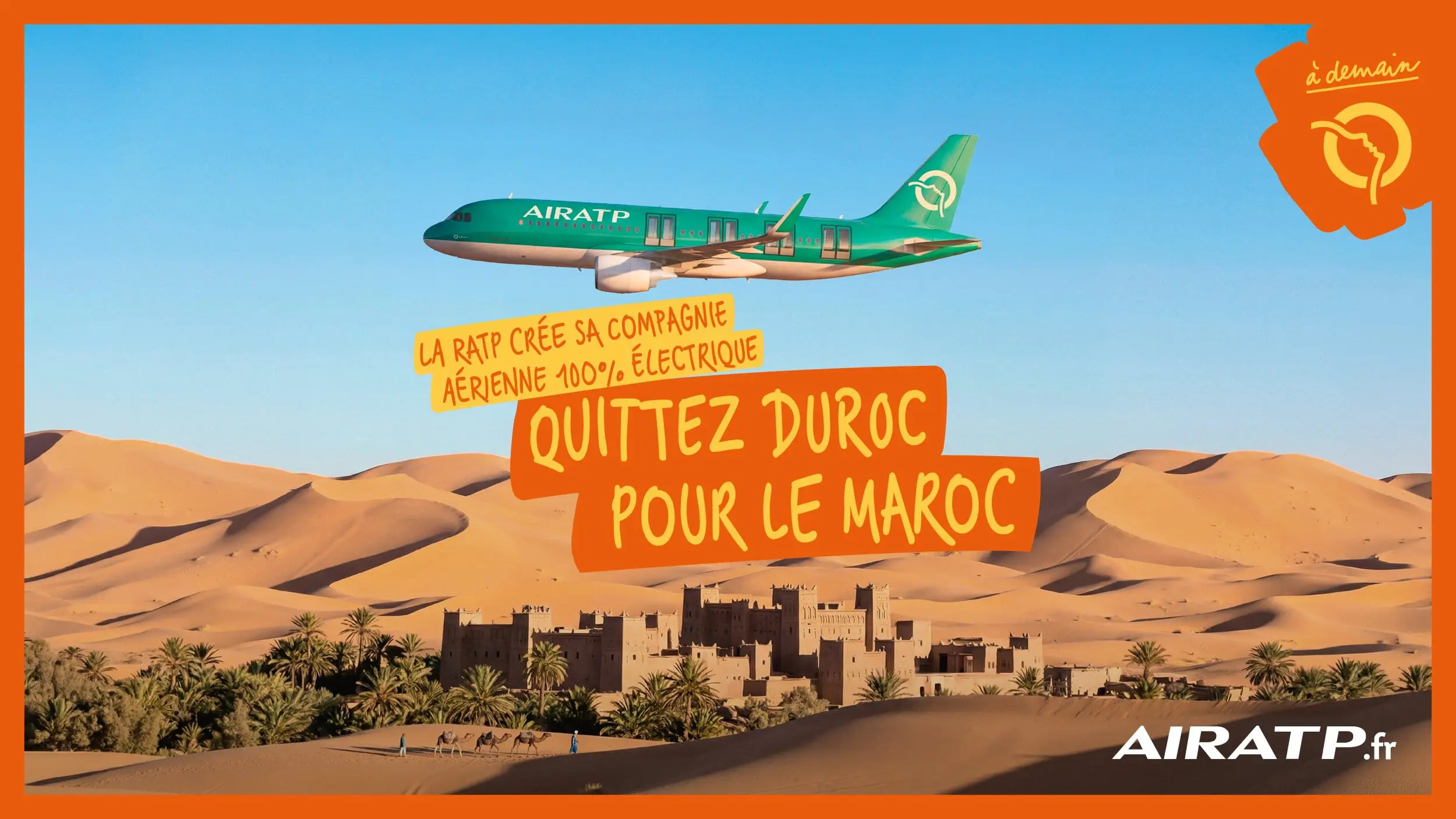
This is precisely what the RATP achieved with AirATP, a fictional 100% electric airline connecting Paris to several major cities and accessible with a Navigo pass. By adopting the codes of an institutional announcement and building on its expertise in mobility, the brand creates a plausible scenario that reinforces its legitimacy… while surprising its audience.
The same logic applies to BlaBlaCar, which imagined BlaBlaPoney, a fictional “horse-carpooling” service developed with the French Equestrian Federation. By playfully reinterpreting the concept of ride-sharing, the platform builds on its DNA while highlighting its positioning around new mobility solutions. This type of activation shows that humor works particularly well when it aligns with the brand’s existing narrative.
This consistency can also rely on cultural references or shared experiences familiar to the public. BIC illustrates this principle with a multi-tip pen capable of writing several lines at once to complete written punishments more quickly. By referencing a widely shared memory, the brand strengthens its connection with its audience while remaining true to its product territory.
April Fool’s Day: a playground to explore new creative territories
Beyond immediate visibility, April Fool’s campaigns allow brands to explore new ideas, test different communication approaches, and symbolically extend their brand territory, while maintaining their distinctive codes.
Dyson imagined Dyson Pet, a range of hair styling devices designed for animals, including an Airwrap Fur dedicated to styling pet fur. By transferring its premium codes into the pet care universe, the brand expands its expertise territory while creating a surprising effect.
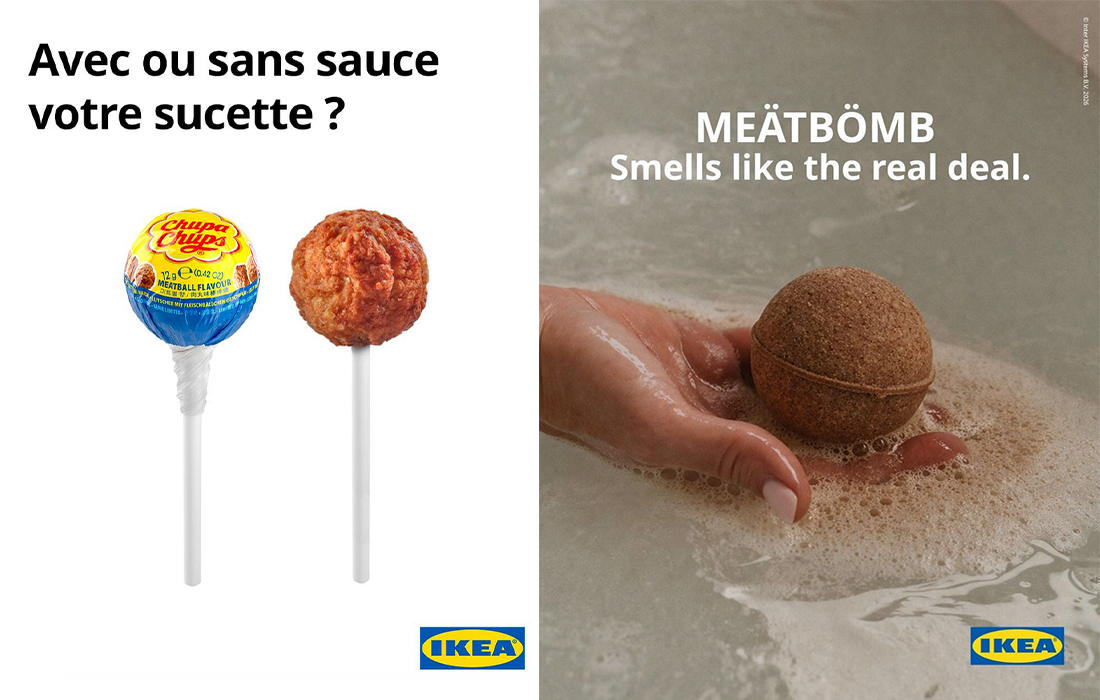
In another approach, some campaigns play on the reinterpretation of iconic products to generate surprise. IKEA partnered with Chupa Chups to imagine a lollipop inspired by the taste of its famous meatballs, blurring the boundaries between sweet and savory worlds. The brand also extended this idea through a bath bomb inspired by the scent of this iconic product. By multiplying variations around a recognizable symbol, IKEA capitalizes on a highly identifiable brand asset while renewing audience attention.
Other activations rely more on societal or behavioral insights to strengthen their connection with audiences. La Mie Câline, for example, imagined a fictional reform introducing a mandatory afternoon snack break lasting between 1.5 and 2 hours, presented as a public health initiative aimed at improving collective well-being. By tapping into conversations around work-life balance and well-being, the brand humorously reinterprets a contemporary concern while remaining consistent with its indulgent universe.
A communication approach with strong engagement potential
The success of these campaigns also lies in their shareability. April Fool’s Day naturally encourages virality: audiences comment, discuss, and share this content, helping to amplify brand visibility. Humor becomes a powerful lever to strengthen proximity with audiences, humanize communication, and express brand personality.
For communication professionals, these activations represent valuable case studies. They demonstrate how creativity, storytelling, and audience insight can combine to produce campaigns that are both impactful and consistent.
Understanding engagement mechanics, mastering platform codes, and designing creative campaigns are among the key skills developed at EFAP. Through its programs in communication, marketing, advertising, and digital strategy, the school prepares future professionals to create relevant messages aligned with the evolution of the industry.
Would you like to learn how to design campaigns that make a lasting impression? Discover the EFAP programs and develop the skills needed to build a career in communication.
See other news

Master en Communication Internationale : Pourquoi choisir l’EFAP ?
Dans un monde de plus en plus connecté, la communication dépasse les frontières. Les entreprises et organisations recherchent des professionnels capables de travailler sur des projets internationaux, de collaborer avec des équipes multiculturelles et de s’adapter à des contextes variés. Intégrer la formation en communication internationale de l’EFAP, c’est bénéficier d’un programme complet et tourné vers l’international. Avec plus de 30 000 diplômés depuis 1961, l’école forme des professionnels polyvalents et experts, prêts à relever les défis du marché global.
read more

The Next Generation of Event Innovators at EFAP
At EFAP, fourth-year students had the opportunity to put their event innovation skills into practice through a project directly inspired by the winners of Meet-in’s Grand Prix de l’Événementiel. This experience immersed them in the realities of the industry while showcasing their creativity through a variety of content formats.
read more

Pourquoi choisir une école d’événementiel pour se former aux métiers de la communication ?
Les métiers de la communication occupent aujourd’hui une place stratégique dans toutes les organisations. Du marketing digital à la communication institutionnelle, en passant par l’événementiel, ces professions exigent créativité, réactivité et sens stratégique. Dans ce contexte, choisir une école d'événementiel spécialisée permet de se former efficacement et de devenir rapidement opérationnel.
read more